Every gallon of gasoline sold in America contains up to 10 percent ethanol — and if some in Congress get their way, it may soon be 15 percent. Most drivers pump it without a second thought, which is exactly how Washington and the farm lobby prefer it. The blending is invisible, the costs are hidden, and the politics are carefully arranged to keep it that way.
The federal Renewable Fuel Standard (RFS), enacted in 2005 and supercharged by Congress in 2007, requires refiners to blend billions of gallons of ethanol and other biofuels into the nation's transportation fuel supply. The program was sold on three premises: it would reduce dependence on foreign oil, cut greenhouse gas emissions, and create a homegrown fuel industry. Two decades later, the Government Accountability Office has concluded the program has fallen short on both of its primary goals. The energy independence problem it was designed to solve was solved instead by American shale producers. And the environmental benefits have proven, at best, debatable — and at worst, a net negative.
What the RFS has reliably produced is higher costs for American drivers and farmers, damaged engines, inflated food prices, and a reliable stream of federal largesse for the corn ethanol industry. The mandate doesn't survive because it works. It survives because the farm belt has enough votes in Congress to protect it.
You're Getting Less for Your Money
The ethanol lobby's most persistent talking point is that ethanol blends are cheaper per gallon than conventional gasoline. That's sometimes true at the pump — and entirely misleading. The correct measure is not cost per gallon but cost per mile. Ethanol contains roughly 33 percent less energy per gallon than gasoline. A driver who fills up with E15 and sees a penny-per-gallon discount at the pump is paying more per mile than the sticker price suggests.
When refiners can't blend enough ethanol to meet their federal quotas, they must purchase Renewable Identification Numbers (RINs) — compliance credits passed directly to consumers. As the mandate pushed against the "blend wall," RIN prices skyrocketed 2,300 percent in a single year. The Congressional Budget Office found that raising mandated corn ethanol use results in higher motor-fuel prices. A Manhattan Institute study estimated biofuel mandates cost U.S. motorists $10 billion annually. IER's analysis found the RFS acts as a hidden tax of roughly $0.10 per gallon — a burden that falls hardest on working families who drive the most.
Ethanol Destroys Engines — Especially Small Ones
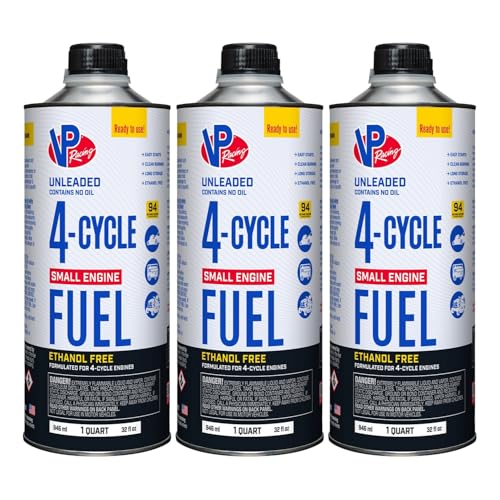
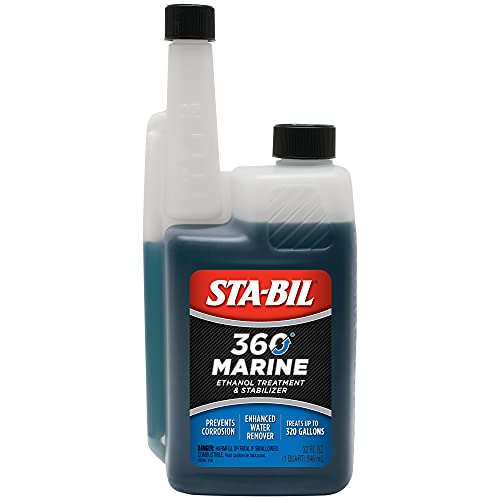
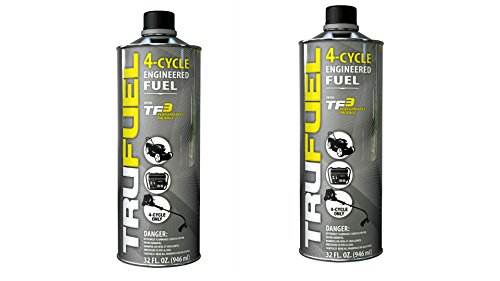
Ethanol is corrosive to rubber and certain metals. It degrades fuel lines, seals, and gaskets over time — manageable in modern cars designed for it, but far more damaging in older vehicles, boats, motorcycles, and small-engine equipment. Ethanol also attracts water from the air. That water separates inside fuel tanks, forming a brown sludge that clogs pumps and filters — a particular hazard in equipment that sits between uses, like boats, lawnmowers, and generators.
When the EPA expanded year-round E15 sales, the Coordinating Research Council found that 5 million cars could experience engine damage or failure. Several automakers declined to warranty their vehicles for E15. AAA called for suspension of E15 sales, citing "consumer confusion and the potential for voided warranties and vehicle damage." The National Marine Manufacturers Association formally opposes gasoline blended with more than 10 percent ethanol.
Big Corn Wins; Your Groceries Cost More
American ethanol is made almost entirely from corn. U.S. ethanol facilities consume approximately 40 percent of the total U.S. corn crop — more than tripling since 2005. Diverting 40 percent of the U.S. corn harvest to fuel puts upward pressure on corn prices, rippling into livestock feed, food processing, and grocery bills. When the RFS ratchets up mandated volumes, the market allocates more inputs to fuel and less to food. Washington is making that decision, not consumers and not the market.
The absurdity reaches its logical extreme in the "advanced biofuel" provisions. The only mass-produced fuel EPA certified as "advanced" is sugarcane ethanol from Brazil. As a result, U.S. refiners import Brazilian sugarcane ethanol while simultaneously exporting American corn ethanol to Brazil. This circular swap does nothing for emissions or energy security. It exists solely because Congress wrote a mandate that made it necessary.
The Environmental Case Doesn't Hold Up
The ethanol lobby calls its product "clean burning." Burning ethanol does produce lower tailpipe carbon monoxide emissions under controlled conditions. But it also increases ozone and smog. A Stanford University study found E85 adds 22 percent more hydrocarbons to the atmosphere, leading to roughly 200 additional ozone-related deaths per year: "Due to its ozone effects, future E85 may be a greater overall public health risk than gasoline."
A study in Science found corn-based ethanol nearly doubles greenhouse gas emissions over 30 years when land-use changes are factored in. The GAO's 2016 assessment found the RFS "is not meeting expected greenhouse gas reductions." Congress in 2007 mandated 36 billion gallons of biofuels by 2022, mostly from cellulosic sources. In 2011, zero gallons of cellulosic ethanol were sold commercially. The federal government spent over $1.1 billion on advanced biofuel R&D between 2013 and 2015. The technology still hasn't materialized at commercial scale.
The RFS Is a Mandate — and That's Worse Than a Subsidy
The ethanol industry's direct tax credit expired at the end of 2011. What replaced it was something more valuable: a federal law requiring Americans to buy the industry's product. As Mother Jones columnist Kevin Drum noted, the subsidies were "not gone, just hidden a little better." A tax credit makes production more profitable. A mandate forces consumers to purchase the product whether they want it or not. Growth Energy, Cargill, ADM, and the corn ethanol complex prefer the mandate because it gives them captive customers and relieves them of competing on quality or price. The RFS has "morphed into a cronyist cash cow that harms consumers and undermines energy security."
The Original Rationale Is Dead
The RFS was enacted on the premise that the U.S. was dangerously dependent on foreign oil. That premise has been overtaken by events. U.S. oil production has surged 149 percent since 2005, driven by the shale revolution. America became a net energy exporter in 2020. The GAO found that the decline in oil imports is primarily attributable to increased domestic oil production — not the biofuel mandate. Today the RFS actively undermines the energy security it once claimed to advance: with domestic biofuel production unable to keep pace with escalating mandated volumes, imports fill the gap.
Congress Should Repeal the RFS
None of this means ethanol would disappear. Refiners use ethanol as an oxygenate — it raises octane and produces cleaner combustion. Billions of gallons would still be consumed without the mandate, wherever it competes on price and performance. What would end is the artificial inflation of demand, the circular Brazil trade, the RIN treadmill, and the pressure to push ever-higher ethanol blends into an infrastructure not designed for them.
The Renewable Fuel Standard was built on promises that haven't been kept. The energy independence rationale collapsed. The greenhouse gas case falls apart with land-use changes. The cellulosic biofuels that were supposed to transform the program never materialized. And the consumers who fund the entire enterprise through higher fuel and food prices have received nothing in return except a guarantee that the corn lobby will continue to be protected from competition. Senator Mike Lee has introduced legislation to limit the worst excesses. That is a start. The complete answer is repeal.
Frequently Asked Questions
Why is there ethanol in gasoline?
The Renewable Fuel Standard (RFS), enacted in 2005 and expanded in 2007, requires refiners to blend billions of gallons of ethanol into the U.S. fuel supply. The program was sold as a way to cut foreign oil dependence and reduce emissions. Two decades later, the Government Accountability Office has concluded it fell short of both goals — energy independence was achieved instead by American shale producers, and the environmental benefits have proven, at best, debatable.
Does ethanol reduce fuel economy?
Yes. Ethanol contains roughly 33% less energy per gallon than pure gasoline. E10 (10% ethanol) reduces fuel economy by approximately 3–4%, meaning you burn more fuel to travel the same distance. The effective cost per mile is higher than the pump price implies.
Is ethanol bad for small engines?
Yes, especially in equipment that sits between uses. Ethanol absorbs moisture, corrodes aluminum carburetor parts and rubber fuel lines, and can dissolve fiberglass fuel tanks. Lawn mowers, boat motors, chainsaws, and generators are particularly vulnerable because months of storage give ethanol time to cause phase separation and leave varnish deposits.
What is ethanol-free gasoline?
Ethanol-free gasoline — often called E0 or "pure gas" — contains no ethanol additive. It has a longer shelf life, is compatible with older fuel systems and small engines, and avoids the moisture-absorption problems that come with ethanol blends. It is sold at a minority of stations across the U.S.; Pumpworthy lists over 5,000 verified E0 locations.