Gasoline (often referred to as petrol) is a transparent, yellowish, and highly flammable liquid refined from crude petroleum. Chemically, it is not a single, uniform compound; rather, it is a highly complex, homogeneous mixture of relatively volatile hydrocarbons typically containing between four and twelve carbon atoms per molecule (commonly referred to as C4 to C12).
The bulk of standard gasoline consists of several chemical families: paraffins (alkanes) — straight or branched-chain saturated hydrocarbons; olefins (alkenes) — unsaturated hydrocarbons containing highly reactive carbon-carbon double bonds; naphthenes (cycloalkanes) — ring-shaped saturated hydrocarbons; and aromatics — ring-shaped unsaturated hydrocarbons, including benzene, toluene, ethylbenzene, and xylenes (often collectively called BTEX).
The Octane Misconception
A common misconception is that gasoline is "mostly octane." While the octane rating scale is determined using iso-octane and n-heptane to measure a fuel's resistance to premature ignition (knocking), these are merely reference compounds. In reality, gasoline is a highly engineered cocktail. Refineries use fractional distillation to separate crude oil by boiling points, followed by chemical processing — such as "cracking" (breaking heavy hydrocarbons into lighter ones) and "reforming" (converting straight-chain alkanes into branched or aromatic structures) — to maximize energy density and ensure the fuel resists knocking under engine compression.
The octane number on the pump describes a fuel's anti-knock performance, not its composition. Regular (87 octane), mid-grade (89), and premium (91–93) differ in their resistance to pre-ignition — not in how much actual octane they contain. Ethanol is commonly added to boost octane cheaply, which is part of why E0 (ethanol-free) fuel often requires premium pricing even when the underlying hydrocarbon quality is the same.
How Gasoline Goes Bad
Gasoline is a highly perishable commodity. When left stagnant in a fuel tank or storage container, it does not remain chemically static. It degrades through four primary pathways, resulting in fuel that can damage or disable an engine.
Autoxidation: The Chemical Breakdown
Gasoline naturally contains trace amounts of highly reactive, unsaturated hydrocarbons called olefins and diolefins. When gasoline is exposed to atmospheric oxygen, these unstable molecules undergo a free-radical chain reaction called autoxidation. This process systematically breaks down the hydrocarbons, forming highly reactive organic peroxides and hydroperoxides.
The oxidation cascade is aggressively accelerated by environmental factors such as ambient heat, light, and contact with trace catalytic transition metals — specifically copper and iron — found within fuel lines and storage tanks. Fuel stabilizers work by interrupting this chain reaction, donating electrons to the free radicals before they can attack the fuel's hydrocarbon structure.
Polymerization: Gum and Varnish Formation
As the autoxidation chain reaction progresses, the oxidized fuel molecules and additive compounds begin to link together (polymerize) into long-chain, high-molecular-weight molecules. Over time, these heavy polymers grow too large to remain dissolved in the fuel and precipitate out as a sticky, amber-colored resin known as "existent gum."
When subjected to engine heat, this gum bakes onto metallic surfaces, drying and hardening into a tough, lacquer-like varnish. The consequences are mechanically devastating: it coats and plugs the microscopic fuel passages in carburetors, fouls fuel injector nozzles disrupting the precise spray pattern, and leaves heavy carbon deposits on intake valves — occasionally causing them to stick. This is the primary reason stored fuel in small engines (lawnmowers, generators, boats, chain saws) causes so much trouble after a winter of storage.
Protect your equipment
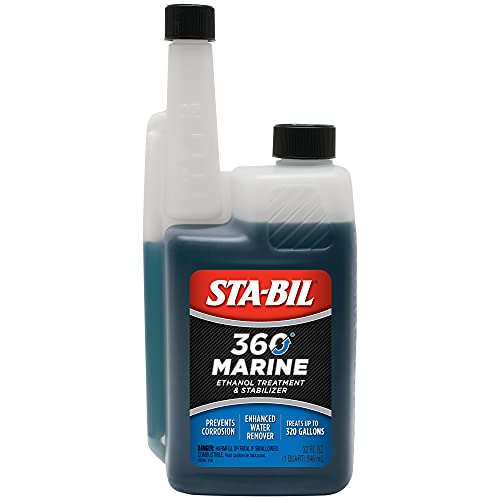
STA-BIL 360 Marine Ethanol Treatment
- Fights phase separation and corrosion
- Use every fill-up with E10 fuel
- Protects boats, small engines, classics
$22.71
Price as of Sep 18, 2026

Briggs & Stratton Ethanol Test Kit
- Verify E0 claims in seconds
- Works on any pump gas
- Glove-box sized test strips
$11.61
Price as of Sep 18, 2026
Evaporative Volatility Loss
Gasoline is specifically formulated with highly volatile, low-boiling-point hydrocarbons (such as butane and pentane) to ensure the liquid easily vaporizes for cold engine starts. If gasoline is stored in a vented tank or an imperfectly sealed container, these volatile "lightweight" hydrocarbons are the first to evaporate into the atmosphere.
As the lighter compounds disappear, the remaining fuel mixture becomes proportionally heavier, less volatile, and significantly harder to ignite. The result is hard-starting engines, rough idling, and hesitation under throttle. This is why fuel cans with sealed, no-spill spouts — and proper storage containers — matter for equipment you don't use daily.
Hygroscopy and Phase Separation: The Ethanol Issue
Most modern pump gas is blended with 10% or 15% ethanol (E10 or E15). While ethanol burns cleanly, it is highly hygroscopic — it actively attracts and absorbs moisture vapor directly from the surrounding air. The polar hydroxyl groups in the ethanol molecules form incredibly strong hydrogen bonds with water molecules.
In a standard E10 fuel blend, the ethanol can hold roughly 0.5% water by volume in suspension. If water contamination (from humidity or condensation cycles) exceeds this saturation threshold, or if the ambient temperature drops significantly, a physical threshold is crossed. The hydrogen bonding between the ethanol and water overpowers the weaker bonds holding the ethanol in the gasoline.
This causes the ethanol and water to completely drop out of the gasoline, forming a dense, distinct layer at the bottom of the fuel tank — a process known as phase separation. It leaves two distinct, highly problematic zones:
The top layer: degraded, low-octane gasoline. Because the ethanol (which provides a major octane boost) has been chemically stripped away, this remaining fuel can cause severe, destructive engine knocking.
The bottom layer: a highly corrosive, incombustible cocktail of ethanol and water. Since fuel pump pickups are located at the bottom of the tank, the engine will immediately draw in this aqueous mix, causing it to sputter and stall. Furthermore, this layer acts as an electrolyte, rapidly corroding internal brass, aluminum, and steel fuel system components.
Phase separation is irreversible — you cannot simply stir the fuel back together. The tank must be drained and the contaminated fuel disposed of. This is the most common cause of small engine failures after seasonal storage, and the primary reason boaters, pilots, and classic car owners seek out ethanol-free E0 fuel whenever possible. E0 doesn't phase-separate because there's no ethanol to attract the water in the first place.
Protect your equipment
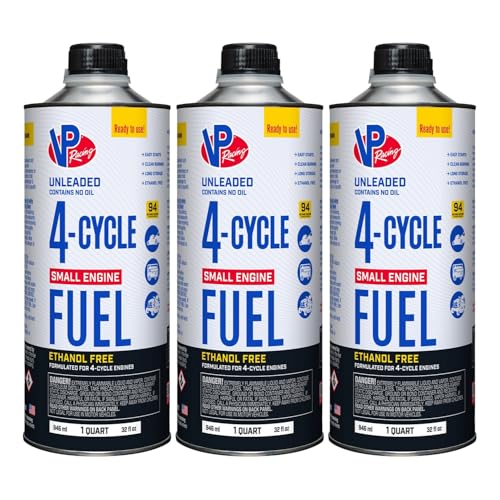
VP Racing SEF 94 Octane Ethanol-Free Fuel, Quart (3-Pack)
- 100% ethanol-free, 94 octane
- Stays stable in storage for years
- Protects 4-cycle small engines
$26.61
Price as of Sep 18, 2026
STA-BIL 360 Marine Ethanol Treatment
- Fights phase separation and corrosion
- Use every fill-up with E10 fuel
- Protects boats, small engines, classics
$22.71
Price as of Sep 18, 2026
Frequently Asked Questions
Does higher-octane gasoline make your car more powerful?
No. Octane rating measures a fuel's resistance to premature ignition (knocking), not its energy content or horsepower potential. Using 91-octane in an engine designed for 87 does not produce more power — it only matters in high-compression or turbocharged engines that require higher octane to prevent knock. Using premium in a standard engine is money wasted.
How long does gasoline stay fresh?
Pure gasoline begins to degrade within three to six months through oxidation and evaporation of light hydrocarbons. Ethanol-blended fuel degrades faster — often within 30–60 days — because ethanol absorbs atmospheric moisture and accelerates the risk of phase separation. A fuel stabilizer can significantly extend storage life.
What causes gum and varnish deposits in carburetors?
Gasoline contains olefins (alkenes) — unsaturated hydrocarbons with reactive double carbon bonds. When fuel sits, these compounds react with oxygen in a process called autoxidation, forming peroxides that then polymerize into sticky, gum-like residues. Those residues dry into the lacquer-like varnish that coats fuel passages and carburetor jets, making old fuel one of the most common causes of small-engine failure.