The pump fuel you bought a month ago is not the same fuel today. By spring, the gas in your lawnmower may have separated into two distinct layers, neither of which your engine can run on cleanly. The carburetor on the weed trimmer you put away in October may be coated in a lacquer-like varnish that no amount of choke and pull-start will overcome. The fiberglass tank under your boat deck may be slowly disbonding because the ethanol is dissolving the resin.
None of this is alarmism. It's chemistry. And the good news is that once you understand what ethanol-blended fuel actually does in storage, the fix is straightforward, cheap, and well within the reach of any reasonably handy person.
Why Ethanol Is in Your Gas in the First Place
Almost every gallon of regular pump gasoline sold in the United States is E10 — 10% ethanol by volume, 90% gasoline. Some stations sell E15 (15% ethanol), and most sell E85 for flex-fuel vehicles. The blend exists for a mix of reasons: ethanol adds oxygen to the fuel, which lowers tailpipe carbon monoxide; it boosts octane cheaply; and it's a Congressionally mandated way to prop up corn agriculture under the Renewable Fuel Standard.
For a modern, daily-driven car burning through a tank every week, E10 is fine. The fuel doesn't sit long enough for any of its weaknesses to matter, and modern engines are engineered for it. The trouble starts the moment fuel sits still — in a lawnmower, a generator, a boat tank, a jerry can in the shed.
What's Actually Happening in Your Tank
Three things go wrong with stored gasoline, and ethanol makes one of them dramatically worse.
1. It Oxidizes
Gasoline is a soup of hundreds of different hydrocarbon molecules, and some of them — particularly the unsaturated ones called olefins — have weak bonds that react readily with the oxygen dissolved in the fuel. Heat, sunlight, and trace metals in the tank act as catalysts. Once oxidation starts, it's a chain reaction: each oxidized molecule produces a free radical that goes on to attack a neighbor.
The visible result is gum and varnish — sticky, lacquer-like deposits that precipitate out of solution as oxidation byproducts get heavier and less soluble. It coats the inside of carburetor passages, clogs injector pintles, and glues intake valves to their seats. Once it hardens into varnish, it doesn't come off easily. This is the "stale fuel won't fire" problem you've encountered if you've ever pulled a starter rope fifty times on a mower that ran fine last fall.
2. The Light Ends Evaporate
Gasoline contains a lot of very volatile light hydrocarbons — butane and pentane chief among them. These are what give the fuel its vapor pressure, the property that lets your engine start on a cold morning by vaporizing enough fuel for the spark plug to ignite. In a vented tank, those light ends slowly escape into the atmosphere. What's left behind is heavier, harder to vaporize, and harder to ignite. You'll experience this as hard starting, extended cranking, and rough idle even after the engine eventually catches.
3. The Ethanol Pulls Water In — and Then It Betrays You
This is the ethanol-specific problem, and it's the worst of the three. Ethanol (C₂H₅OH) is hygroscopic. The hydroxyl group on the molecule forms strong hydrogen bonds with water vapor in the air. So while pure gasoline naturally repels water, ethanol-blended gasoline actively pulls moisture in through your tank vent every time the temperature swings.
For a while, this is manageable. An E10 blend can hold roughly 0.5% water by volume — about 3.8 teaspoons per gallon — invisibly dissolved in suspension. Below that threshold, the engine atomizes the mixture, the water passes through the combustion chamber as steam, and you'd never know it was there. Above that threshold, you get phase separation.
Phase Separation: the Worst-Case Scenario
Here's what happens. The ethanol's hydrogen bonds with absorbed water keep getting stronger as more water comes in. At some point — and this point gets worse as temperatures drop — those hydrogen bonds overpower the weaker forces holding the ethanol dissolved in the gasoline. The ethanol abandons the gasoline and binds completely to the water.
The result is a tank with two distinct layers:
Top layer: the gasoline, now stripped of its ethanol. Since ethanol was contributing a meaningful share of the fuel's octane rating, this remaining fuel is now lower-octane than the engine expects. Run it and you'll get knocking, pinging, and at worst, piston damage from pre-detonation.
Bottom layer: a concentrated water-ethanol slurry, sitting exactly where your fuel pump pickup tube sits. It's corrosive, it conducts electricity (which accelerates galvanic corrosion on brass jets, aluminum carburetors, and steel lines), and it will not burn. Start the engine and this is the first thing it tries to ingest.
And here's the most uncomfortable fact: once phase separation has happened, you generally cannot reverse it with an additive. The fuel has to be pumped out, disposed of as hazardous waste, and the system has to be dried. Prevention is everything.
How to Know Your Fuel Is in Trouble
Before you reach for tools, look and listen.
Visual: Pure gasoline is a pale straw-yellow color. As it oxidizes, it darkens — first to amber, then orange, then a deep brown that looks like weak iced tea. If you can pull a sample from your tank into a clear glass jar and see distinct layers, or cloudy water at the bottom, you have phase separation. An ethanol test strip can confirm the blend level before you even pour.
Smell: Fresh gasoline has a sharp, characteristic smell. Stale fuel smells flat, sour, almost like turpentine or old varnish. Trust your nose.
Behavior: Hard starting, extended cranking, surging idle, loss of throttle response, popping through the intake, and stalling at low RPM are all classic signs of stale or contaminated fuel.
The carb test: On a small engine, pull the float bowl drain or remove the bowl entirely. If you find a gummy residue, a green or white powdery corrosion, or pooled water at the bottom — that's your diagnosis.
Protect your equipment

Briggs & Stratton Ethanol Test Kit
- Verify E0 claims in seconds
- Works on any pump gas
- Glove-box sized test strips
$11.61
Price as of Sep 18, 2026
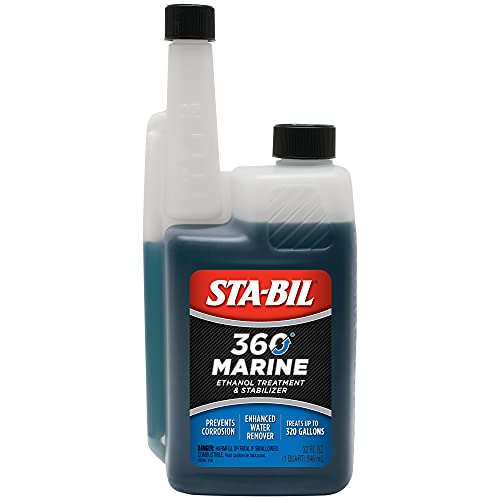
STA-BIL 360 Marine Ethanol Treatment
- Fights phase separation and corrosion
- Use every fill-up with E10 fuel
- Protects boats, small engines, classics
$22.71
Price as of Sep 18, 2026
The Playbook by Machine Type
Your Daily-Driven Car
Honestly, you don't need to do much. Modern fuel-injected cars with sealed evaporative emission systems are well-defended against most of the ethanol problem, and you cycle the tank often enough that nothing has time to go wrong. The one exception: if a car is going to sit for more than a month, treat it like seasonal equipment below.
Seasonal Small Engines — Mowers, Snowblowers, Trimmers, Chainsaws
This is where most ethanol damage happens. The rule of thumb: for the last fill of the season, buy fresh gasoline. Add stabilizer at the manufacturer's storage dose — not the lower maintenance dose. Do this at the gas station if you can: pour the stabilizer into the can before you pump in the gas, so the fuel mixes itself on the drive home. Then run the equipment for five to ten minutes with the treated fuel in the tank, so the stabilizer reaches the carburetor and fuel lines.
For carbureted equipment, strongly consider buying ethanol-free E0 fuel for the last fill. It's $1–2 more per gallon, but it sidesteps the phase-separation problem entirely.
Full tank or empty? The case for full: less air means less moisture ingress. The case for empty: no fuel to go bad. For most small carbureted engines, the empty-tank approach is cleaner — drain the tank, run the carb dry, store dry. For machines with steel tanks or hard-to-empty fuel systems, fill it full of stabilized E0 instead.
Boats and Outboard Motors
Marine engines are the worst-case environment for ethanol fuel: high humidity, vented tanks that breathe constantly, fuel that sits between weekend outings, and fiberglass tanks on older boats that can actually be dissolved by ethanol.
Burn ethanol-free fuel if you can — most marinas sell E0 by design. If you must use E10, treat every tank all season, not just for storage. Use a fuel-water separator filter with a clear bowl and inspect it before every outing. For winter storage: treat with an enzymatic stabilizer, top the tank to 95% full to minimize air space, and run the engine long enough to circulate treated fuel through the carburetor or injectors. And if you own a vintage fiberglass boat built before the mid-1990s, verify tank compatibility — polyester resin tanks can be attacked by ethanol, producing a black sludge that destroys engines.
Generators and Emergency Fuel Storage
If you own a generator for emergencies, you may need fuel that's been sitting for one or two years to fire instantly at 3 AM when the power goes out.
Buy ethanol-free fuel for stockpiled cans — this is non-negotiable for anything you expect to store more than six months. Use the most concentrated, longest-lasting stabilizer you can (PRI-G, below). Use metal jerry cans rather than cheap red plastic — plastic cans are permeable to moisture and to the light hydrocarbons evaporating out. Rotate the stockpile: pour the oldest can into your daily-driven car each spring, refill with fresh stabilized fuel. And run the generator under load every three to six months — don't just start it, actually plug something in and let it work for fifteen minutes.
The Stabilizer Landscape
Walk into any auto parts store and you'll see a wall of bottles making overlapping claims. Most work for what they're designed to do. The trick is matching the chemistry to the problem.
STA-BIL Storage
The familiar red bottle, and the dominant retail brand for good reason. STA-BIL's active ingredients are hindered phenolic antioxidants — molecules that mop up the free radicals driving oxidation and prevent the chain reaction that produces gum. It's purely a preventer: it does not actively clean existing varnish. What it does is keep fresh fuel fresh for up to 24 months, with strong evidence that it provides excellent protection against corrosion of brass and pot-metal carburetor components. Use it for seasonal storage of mowers, snowblowers, motorcycles, and classic cars. Treatment ratio: 1 oz per 2.5 gallons.
Star Tron Enzyme Fuel Treatment
The white bottle from the marine aisle, and chemically the most unusual of the lot. Star Tron uses a proprietary enzyme blend that reduces the interfacial surface tension between water and fuel — letting any absorbed water be carried through combustion as sub-micron droplets that vaporize harmlessly — and breaks apart agglomerated hydrocarbon clusters to improve combustion. It's the only major product specifically engineered around the ethanol-and-water problem, which is why it dominates marine applications. Treatment ratio: 1 oz per 16 gallons.
Sea Foam Motor Treatment
A blend of pale oil, naphtha (a powerful petroleum solvent), and isopropyl alcohol. Sea Foam is a cleaner first and stabilizer second. The naphtha is aggressive enough to dissolve existing varnish in a fouled carburetor. The isopropyl alcohol pulls water back into solution without the hygroscopy of ethanol. It's not the right product for multi-year fuel storage — its stabilizing chemistry is weak relative to STA-BIL or PRI-G — but it's the best tool when you need to actively clean a machine that's already fouled or rescue a tank with trace water. Treatment ratio: 1 oz per gallon.
PRI-G
The industrial product on this list. Originally formulated for refineries, military fuel stockpiles, and commercial marine, it has slowly leaked into the consumer market through emergency-preparedness channels. Its chemistry is heavier than anything else on the shelf: aromatic amines and organic dispersants in a hydrocarbon carrier. The amines are far more thermally stable radical scavengers than phenols; the dispersants can actively break apart soft, early-stage gum that's already formed.
ASTM D525 induction-period testing shows untreated gasoline failing in roughly four hours of accelerated stress, while PRI-G-treated fuel extends past twelve hours — the difference between months of storage and years. Independent testing also documented PRI-G inhibiting phase separation in E10 even when excess water is added, a claim no other consumer stabilizer can reliably make. It's not sold at Walmart, but the dilution ratio is so concentrated that the per-gallon cost is among the cheapest. Use it for long-term stockpiling and generator reserves. Treatment ratio: 1 oz per 16 gallons.
| Product | Best for | Rate | $/gal | Chemistry |
|---|---|---|---|---|
| STA-BIL Storage | Seasonal 6–24 month storage | 1 oz / 2.5 gal | ~$0.16 | Hindered phenol antioxidants |
| Star Tron | Marine, humid environments | 1 oz / 16 gal | ~$0.05 | Enzymatic water dispersion |
| Sea Foam | Cleaning fouled carbs, rescuing wet tanks | 1 oz / 1 gal | ~$0.88 | Naphtha solvent + isopropanol |
| Lucas | Daily drivers, GDI lubricity | 1 oz / 2.5 gal | ~$0.14 | Phenols + paraffinic distillate |
| PRI-G | Multi-year storage, restoration | 1 oz / 16 gal | ~$0.07 | Aromatic amines + dispersants |
Protect your equipment
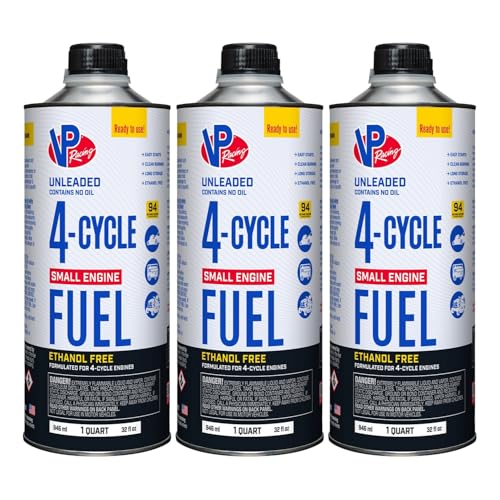
VP Racing SEF 94 Octane Ethanol-Free Fuel, Quart (3-Pack)
- 100% ethanol-free, 94 octane
- Stays stable in storage for years
- Protects 4-cycle small engines
$26.61
Price as of Sep 18, 2026
STA-BIL 360 Marine Ethanol Treatment
- Fights phase separation and corrosion
- Use every fill-up with E10 fuel
- Protects boats, small engines, classics
$22.71
Price as of Sep 18, 2026
Beyond Stabilizers: the Rest of the Playbook
Buy Ethanol-Free Fuel When You Can
This is the single most powerful move in the whole playbook. Ethanol-free gasoline (E0) sidesteps every ethanol-specific problem — no hygroscopy, no phase separation, no rubber-and-resin compatibility issues, and much longer storage life. It's almost always 91 or 93 octane premium, marketed as "recreational" or "marine" fuel to justify the premium price.
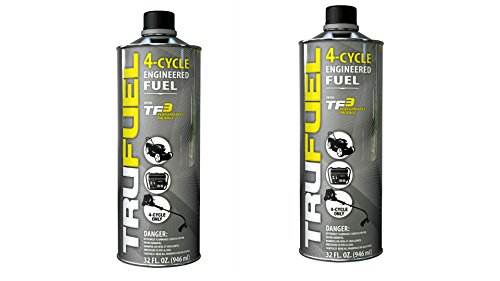
Where to find it: Pumpworthy's directory lists 6,477 verified E0 stations searchable by state and chain. Marinas almost universally sell E0. Many rural and small-town stations sell E0 at the pump, particularly in agricultural areas. TruFuel and VP Small Engine Fuel sell pre-mixed E0 in quart and gallon cans at hardware stores — expensive per gallon but very convenient for chainsaws and trimmers.
Use E0 in: anything stored more than a month, every two-stroke engine you own, any carbureted small engine, any boat, any classic car, any pre-1990s vehicle, any generator.
Manage Your Tanks
Keep tanks either full or empty, not half-full. A half-full tank has the maximum surface area of fuel exposed to air and the maximum volume of humid air available to deposit moisture as the temperature swings. Top off before storage, not after a trip. Replace rubber fuel lines every five to ten years on older equipment — ethanol attacks older neoprene formulations; modern fluorocarbon (Viton, FKM) lines with "E10/E15 compatible" or "ISO 7840 A2" designation are dramatically more durable. Replace fuel filters annually on small engines.
Rotate Your Stockpile
Label each can with the fill date in permanent marker. Pour the oldest can into your daily-driven car every six to twelve months and refill it with fresh stabilized fuel. A six-can rotation, refilled twice a year, gives you a continuously fresh emergency stockpile with no fuel ever older than three years — well within stabilized fuel's safe range.
Run Your Equipment
The single best thing you can do for any stored engine is start it. Generators every quarter, boats once a month if weather allows, snowblowers in October before the first storm — every time the engine runs, fresh stabilized fuel cycles through the carburetor and injectors, seals get lubricated, and you discover problems while you have time to fix them rather than when you actually need the machine.
When the Worst Happens: Dealing with Already-Separated Fuel
If you pull a clear sample from a tank and see two distinct layers, here is your reality:
Don't run the engine. Cranking it pulls the corrosive water-ethanol slurry directly into the fuel system. Drain the tank completely — for small equipment, pop the fuel line and gravity-drain into a metal container; for larger tanks, a 12V transfer pump makes short work of it. Dispose of the fuel as hazardous waste (most auto-parts stores accept it for recycling). Inspect everything downstream: pull the fuel filter, the carburetor float bowl, the fuel pump if accessible. Look for corrosion, water residue, and gummy deposits. Dry the tank, refill with fresh fuel and a heavy stabilizer dose, and run the engine for ten minutes before proceeding with proper storage prep.
For small carbureted engines with a fouled carb: drain the tank, pull the carburetor, and either clean it manually with carb cleaner and a fine wire or replace it. Aftermarket carbs for common small engines are often $15–30 and not worth the time to clean. Replace the fuel filter and inspect the fuel lines for cracking or swelling.
There is no shortcut, and there is no additive that reliably re-emulsifies separated fuel. The chemistry is one-way.
A Note on Modern Emissions Equipment
A common worry, particularly with classic-car owners: will any of this hurt my catalytic converter or oxygen sensor? For STA-BIL, Star Tron, Sea Foam, Lucas, and PRI-G — the answer is no. None of them contain the substances that actually poison emissions equipment: no lead, no manganese, no silicone, no phosphorus. They're compatible with GDI engines, oxygen sensors, and modern catalytic converters.
The products to avoid are octane boosters and "horsepower additives" containing MMT (methylcyclopentadienyl manganese tricarbonyl) or ferrocene, which actively damage catalysts and oxygen sensors. Read the label.
The Bottom Line
For anything you use daily and burn through quickly, ignore ethanol. It's a non-problem. For anything that sits — mowers, snowblowers, boats, motorcycles, generators, classic cars, jerry cans in the shed — your defense is in three layers.
The first and most powerful layer is buying ethanol-free fuel for anything stored more than a month. It's a few dollars more per fill and it makes most of the rest of this article unnecessary.
The second layer is a good stabilizer at the right dose, added to fresh fuel before storage, then circulated through the engine by running it for five to ten minutes. Star Tron is the safe default for any ethanol-blended fuel; STA-BIL for shorter-term seasonal storage; PRI-G for anything you need to last more than a year.
The third layer is discipline: rotate your stockpile, run your equipment, top off before storage, inspect filters and lines, and trust your nose when you sniff fuel that's been sitting since last fall.
Do those three things and ethanol stops being a threat to your machines. Skip them, and sooner or later you'll find yourself in the garage on a hot August afternoon, pulling a starter rope on a mower that should fire but won't — staring down a fouled carburetor and a tank of fuel that's been quietly turning into varnish since October.
Frequently Asked Questions
What is phase separation in gasoline?
Phase separation happens when ethanol-blended fuel absorbs enough atmospheric moisture that the ethanol and water separate from the gasoline, sinking to form a distinct lower layer in the tank. That layer is corrosive, cannot burn efficiently in most engines, and is the most destructive outcome of storing E10 or E15 — particularly in boats and seasonal equipment left sitting for months.
How long does ethanol-blended gasoline stay good?
E10 gasoline typically starts degrading within 30–60 days in storage. Oxidation breaks down hydrocarbons, light ends evaporate, and ethanol absorbs moisture from the air. Adding a quality fuel stabilizer rated for ethanol-blend fuels can extend usable storage life to 12–24 months.
How do I protect my boat motor from ethanol damage?
The most reliable solution is to use ethanol-free E0 fuel whenever a station near you sells it. If that is not practical: add a marine-grade fuel stabilizer, keep the tank full to reduce air space where moisture condenses, and drain or fog the carburetor before any extended storage. Fiberglass tanks are especially vulnerable — ethanol can dissolve the resin over time.
Can I use regular E10 gasoline in my lawn mower or chainsaw?
Most small engines tolerate E10 for immediate use, but it should not sit in the tank for more than 30 days without a stabilizer. Ethanol absorbs moisture during storage, causing phase separation and varnish deposits that clog carburetors. For seasonal equipment, ethanol-free fuel or a stabilizer added before storage is strongly recommended.